
How Yo-Chi Turned Pre-Launch Rumours Into Launch-Day Buzz in Singapore
What if the secret to a successful store launch was getting people talking before revealing what was coming?
When Australian frozen yoghurt brand Yo-Chi prepared to open its first Singapore outlet, KOBE set out to turn a conventional store opening into something audiences could discover, discuss and experience for themselves.
Rather than starting with a straightforward announcement, the campaign built curiosity through creator-led teasers, cryptic sightings and location hints. As the opening approached, the story shifted from speculation to real experiences, with creators showcasing Yo-Chi’s self-serve frozen yoghurt, customisable toppings and launch-day excitement.
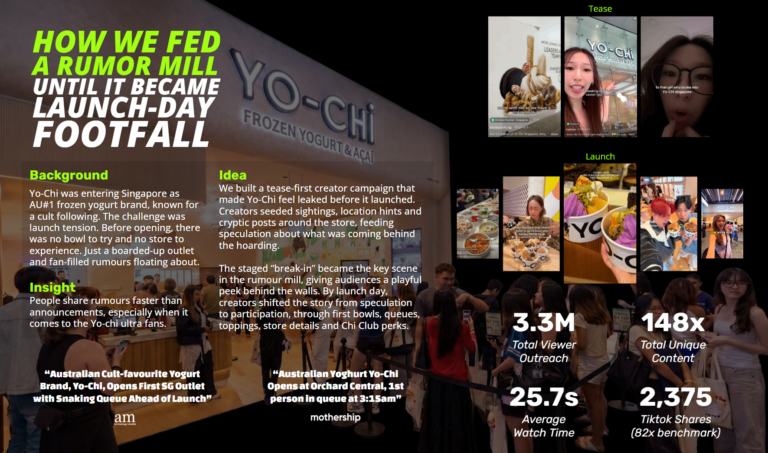
According to KOBE’s original campaign performance summary, the launch recorded 3.3 million in total viewer outreach, highlighting the scale of attention surrounding Yo-Chi’s Singapore debut.
TL;DR
- Yo-Chi partnered with KOBE to build awareness and anticipation ahead of its first Singapore outlet opening.
- The campaign used a two-phase Tease and Launch strategy, turning early speculation into conversations about the brand’s arrival.
- KOBE worked with over 90 creators across Instagram and TikTok, using short-form content to build excitement around the launch.
- Smaller creators formed the foundation of the campaign, helping Yo-Chi appear across different audience communities.
- The campaign summary reported 3.3M total viewer outreach.
- The key takeaway: curiosity-driven storytelling and relevant creators can help brands build anticipation before launch day.
The Challenge: Standing Out in Singapore’s Crowded F&B Scene
Singapore’s food scene is constantly welcoming new cafés, desserts and dining concepts. With so many options competing for attention, launching a new brand requires more than announcing an opening date.
For Yo-Chi, an Australian frozen yoghurt brand with an established following back home, the challenge was to introduce its self-serve concept to Singaporeans while building excitement around its arrival.
The campaign needed to build awareness before the outlet opened, encourage conversations about the upcoming launch and give consumers a reason to experience Yo-Chi for themselves.
Rather than relying solely on traditional promotional announcements, KOBE saw an opportunity to make Yo-Chi’s arrival feel like a developing story.
The Insight: People Love Being Among the First to Know
Have you ever come across a TikTok hinting that a popular overseas brand might be opening in Singapore?
Before anything is officially confirmed, people start asking questions, sharing possible locations and sending the news to friends.
That behaviour became the foundation of Yo-Chi’s campaign.
People enjoy discovering something new, particularly when it feels relevant to their interests or social circles. For an F&B brand entering Singapore, this creates an opportunity to build anticipation before the first customer walks through the door.
Instead of revealing everything immediately, KOBE used creators to introduce information gradually, giving audiences reasons to follow the story as it unfolded.
The idea was simple: turn curiosity into conversation before turning conversation into a launch experience.
The Strategy: From Rumours to Reality
KOBE developed a creator-led campaign built around two connected phases: Tease and Launch.
Each phase served a different purpose, allowing the campaign to move naturally from early curiosity to real-world participation.
Phase 1: Tease and Give People Something to Talk About
Before the official opening, creators introduced cryptic sightings, location hints and clues suggesting that something new was arriving in Singapore.
Rather than immediately revealing the brand, the content encouraged audiences to speculate about what was coming.
This approach gave viewers information they could discuss or share, creating opportunities for Yo-Chi to appear in conversations before the full announcement.
It also provided a natural storytelling hook for short-form content, where an intriguing opening can encourage audiences to continue watching.
Phase 2: Launch and Show People What the Hype Was About
Once Yo-Chi’s arrival was revealed, creators shifted towards showcasing the actual experience.
Content highlighted the self-serve concept, colourful toppings, personalised frozen yoghurt bowls and the atmosphere surrounding the new outlet.
These moments helped audiences understand what made Yo-Chi different from a typical dessert stop.
Rather than simply telling viewers that Yo-Chi was worth visiting, the creators showed what they could expect when they arrived.
The opening-day queues also became part of the story, providing a visible indication of the excitement surrounding the launch.
Together, both phases gave audiences different reasons to engage, from wanting to know what was coming to wanting to experience it themselves.
Building Momentum Through the Right Creator Mix
Beyond the teaser concept, the campaign’s creator selection and content distribution played an important role in how Yo-Chi built visibility.
Instead of depending on a handful of large influencers, KOBE worked with a broad mix of creators, with an emphasis on nano- and micro-creators.
Around 72% of recorded content placements came from creators with audiences of 25,000 or fewer.
This approach created opportunities for Yo-Chi to appear across different creator communities, rather than relying on one large audience.
A smaller number of mid-tier creators complemented this mix, helping extend the campaign’s potential audience.
Creator relevance was equally important. Food, lifestyle and community-oriented creators could introduce Yo-Chi through content that felt familiar to their followers.
As explored in KOBE’s article, How Yo-Chi Became Singapore’s Next Big Food Trend, the strategy prioritised audience fit and authentic creator experiences rather than follower count alone.
This helped establish a foundation for community participation, with consumers also sharing their own experiences after discovering the brand.
How the Content Strategy Supported Campaign Visibility
The campaign didn’t rely on one content format to carry the entire launch.
Instead, KOBE distributed creator content across Instagram Stories, TikTok and Instagram Reels, giving audiences multiple opportunities to encounter Yo-Chi.
Instagram Stories: Keeping Yo-Chi Visible
Instagram Stories accounted for approximately 60% of recorded content placements, making it the most frequently used format.
Stories provided a way for creators to share quick updates, store visits and everyday experiences with their existing followers.
The volume of Stories also meant that Yo-Chi could appear repeatedly across different creator accounts throughout the campaign.
TikTok: Supporting Discovery Through Short-Form Content
TikTok offered opportunities to showcase Yo-Chi through playful short-form storytelling, from teasing the launch to documenting the experience of building a frozen yoghurt bowl.
The platform’s discovery-oriented format made it a useful channel for introducing the brand beyond conventional store-opening announcements.
Instagram Reels: Showcasing the Experience
Instagram Reels offered another way to highlight the visual appeal of Yo-Chi’s self-serve experience, including its toppings, yoghurt combinations and store atmosphere.
Together, the three formats supported different parts of the launch story, from frequent updates to short-form discovery and visual product experiences.
The Results: Building Visibility Across Creator Communities
KOBE’s original campaign summary reported 3.3 million in total viewer outreach for Yo-Chi’s launch.
The broader creator activity also recorded:
- 151 content placements across Instagram Stories, TikTok and Instagram Reels.
- 91 unique creator handles involved in the campaign.
- 72% of placements from creators with audiences of 25,000 or fewer.
These figures help illustrate how Yo-Chi’s launch was supported by a broad network of creators and content formats.
Rather than depending on a single viral post, the campaign created multiple opportunities for audiences to discover the brand.
Instagram Stories supported frequent exposure, while TikTok and Reels offered additional ways to introduce the product through engaging short-form content.
The phased storytelling strategy also gave creators different moments to share, from early speculation to opening-day experiences.
Together, these elements help explain how the campaign was designed to build widespread attention.
Beyond Social Media: When the Launch Became the Story
The excitement surrounding Yo-Chi’s arrival extended beyond creator content.
As the brand officially opened at Orchard Central, the queues and customer experiences became part of the wider conversation.
The launch also attracted attention from industry media.
According to MARKETING-INTERACTIVE’s coverage of Yo-Chi’s Singapore debut, more than 90 creators supported the launch, with short-form content across TikTok, Instagram Reels and Stories showcasing the brand’s interactive self-serve experience.
The publication also highlighted the queues outside Yo-Chi’s Orchard Central outlet on opening day.
This gave the campaign an additional storytelling moment beyond the initial teaser phase.
For audiences who had not visited the store, seeing real customers create their own frozen yoghurt bowls and participate in the opening helped make the experience more tangible.
While the campaign data does not establish a direct causal link between creator content and store footfall, the launch demonstrates how social media storytelling and physical brand experiences can reinforce one another.
What Brand Marketers Can Learn From Yo-Chi’s Campaign
1. Build Anticipation Before the Official Reveal
Yo-Chi didn’t rely on a single opening announcement.
By introducing clues and gradually revealing the brand, the campaign created multiple moments for audiences to discover and discuss the launch.
For marketers, a phased approach can help build momentum before the main launch event.
2. Prioritise Creator Relevance Over Follower Count Alone
With smaller creators forming the foundation of the campaign, Yo-Chi demonstrated how a broad creator network can support a large-scale launch.
Working across different creator communities can help a brand reach audiences through familiar voices and relatable content.
3. Give Each Content Format a Clear Role
Instagram Stories provided the greatest content volume, while TikTok and Reels offered additional short-form storytelling opportunities.
Rather than using every platform in exactly the same way, brands can consider how different formats support awareness, discovery and product consideration.
4. Let the Audience Experience Become Part of the Story
Yo-Chi’s launch content didn’t stop at announcing the store opening.
By showcasing personalised bowls, toppings and opening-day experiences, creators gave audiences something visual and relatable to connect with.
For F&B brands, the customer experience itself can become a compelling source of social content.
Conclusion: A Launch Worth Talking About Starts Before Opening Day
Yo-Chi’s Singapore debut shows how a creator-led launch can build anticipation before a brand officially opens its doors.
By combining teaser storytelling, a broad network of smaller creators and a mix of short-form content formats, KOBE helped introduce Yo-Chi through multiple moments of discovery.
The campaign’s original summary reported 3.3 million in total viewer outreach, while additional campaign records documented extensive creator participation and content activity.
Beyond the numbers, the campaign illustrates an important marketing lesson: the most memorable launches don’t simply announce what’s coming. They give audiences a reason to follow the story and experience it for themselves.
Looking to create excitement around your next brand or product launch? Explore how KOBE’s influencer marketing services can help turn your campaign into a story worth sharing.
Frequently Asked Questions
How did Yo-Chi use influencer marketing for its Singapore launch?
KOBE used creator-led teasers to build curiosity before Yo-Chi’s opening, followed by store visits and firsthand experiences to introduce the brand to Singapore audiences.
Why did Yo-Chi use a teaser campaign instead of a traditional launch announcement?
The teaser approach encouraged audiences to speculate about the brand’s arrival, helping create conversations and anticipation before the official opening.
How much impact did influencer marketing have on Yo-Chi’s Singapore launch?
Yo-Chi’s campaign recorded 3.3 million in total viewer outreach, with over 90 creators helping build widespread awareness and excitement around its Singapore debut.
What are the key takeaways for brands from Yo-Chi's influencer marketing campaign?
Brands can build stronger launch anticipation by creating curiosity before the official reveal. Yo-Chi’s campaign shows how creator-led storytelling can turn early interest into wider conversations and brand awareness.